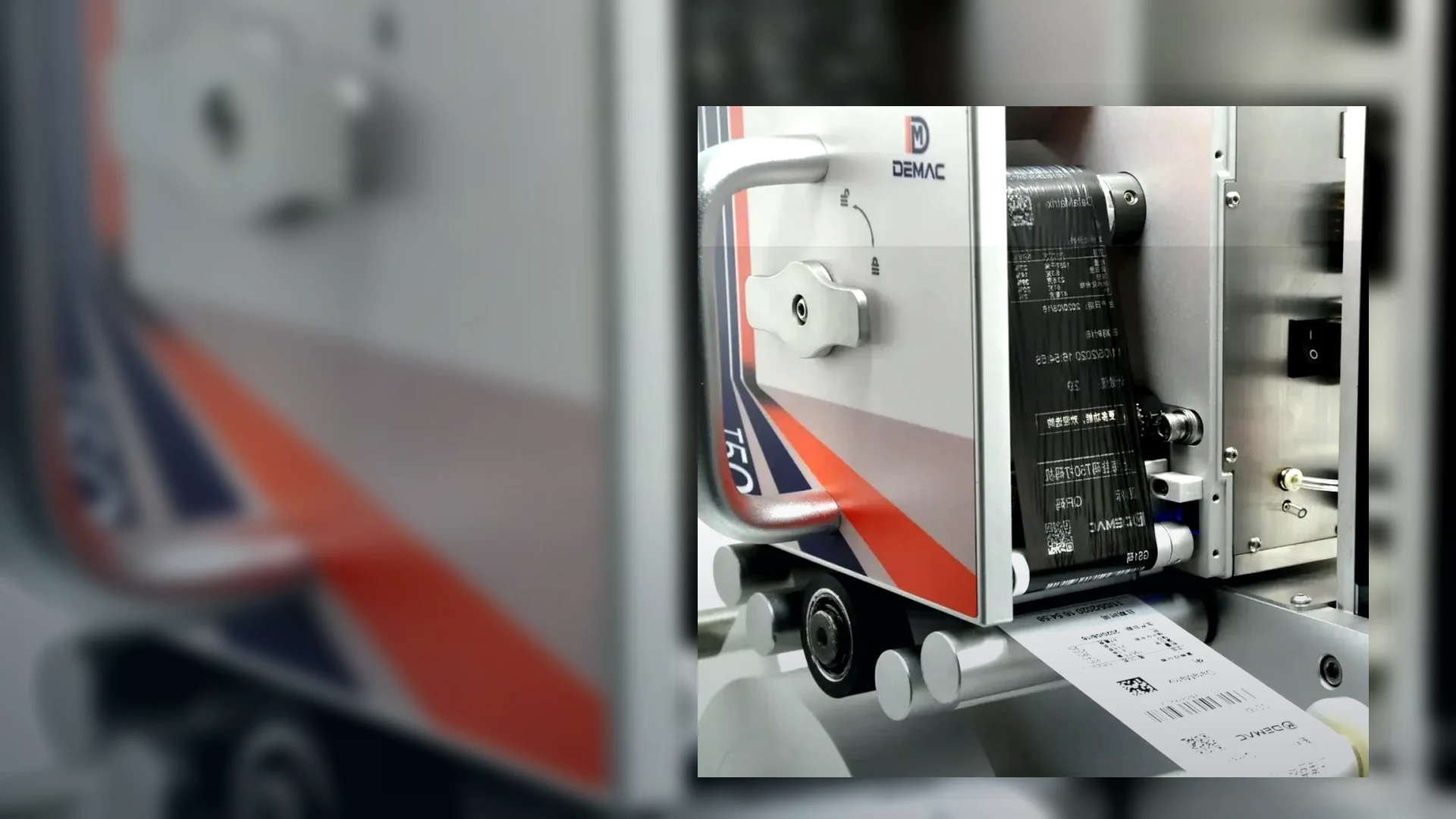
Flow wrapper coding printers for date and batch marks
Specify coding equipment for flow-wrap film so date, batch and traceability data are printed before the pack is sealed.
Application guidance for flow-wrap coding.
How to specify this coding application
Flow-wrapper coding normally happens on flexible film before the product is wrapped. The printer must fit the film path, match the machine speed and print within the available window. Thermal transfer overprinting is usually the main route to review for high-quality date and batch marks on flow-wrap material.
- Continuous film movement and encoder requirements
- Print position relative to the final pack format
- Ribbon width and print-head size selection
- Date, batch, barcode and QR code print capability
- Machine access for ribbon replacement and cleaning
- Validation of scan quality where barcodes are used
Recommended coding routes
Use these routes as a starting point before confirming samples, speed, substrate and integration details.
Standard date marks
TTO can print clear production and best-before dates onto flow-wrap film.
Traceability codes
Barcodes, QR codes and serial codes should be tested at real size and speed.
Multiple products
Message management helps operators change between SKUs without retyping each code.
Related coding machinery pages
These pages help connect the application to the most suitable coding technology and support route.
Flow-wrap coding FAQs
What printer is commonly used on flow wrappers?
Thermal transfer overprinters are commonly reviewed for flow-wrapper film coding because they suit flexible film and high-quality variable print.
Can flow-wrap coders print barcodes?
Yes, TTO systems can print barcodes and QR codes if there is enough print area and the code can be scanned reliably.
Does the printer mount before sealing?
Usually the coder prints on the film before wrapping and sealing so the code lands in the right place on the finished pack.
What affects print quality on flow-wrap film?
Film type, ribbon selection, print speed, print-head pressure, code size and machine vibration all matter.
Need help with flow-wrap coding?
Send your material, speed, code size and example data so Lancing can recommend the right coding route.
Relate the print position to the finished wrapped pack
For a flow wrapper, mark the required code on the finished pack and on the flat film artwork. Show seams, folds and the point where the product determines the final position. Ask the coding proposal to explain how the message remains in the intended area as pack length or film changes.
Include the wrapper movement and job sequence in the assessment. Record how printing is triggered, what happens during a pause and how the first packs after film or product change are checked. Evaluate the printed area after it has passed through the full wrapping process.
- Film reference
- Provide the production film, artwork repeat and intended finished code position.
- Restart check
- Include stop, restart and product-change conditions in the agreed demonstration.
Is a successful print on a loose film sample enough?
It supports ink or ribbon assessment, but the installation also needs to demonstrate print position and condition on film passing through the actual wrapping sequence.