Coding machine cost factors and budgeting
A useful coding-machine budget covers the complete production station, not only the printer. This guide explains the factors that alter capital cost, installation effort and ongoing running cost without inventing a one-size-fits-all price.
Build the budget around the coding duty
The printer is only one part of the investment. The same date or batch message can require a very different project when it moves from a flat carton to a curved bottle, from an intermittent web to a continuous conveyor, or from operator-entered data to an automatically controlled traceability system.
Print technology and format
Hot foil, thermal inkjet, thermal transfer overprinting, continuous inkjet and print-and-apply solve different production problems. Print width, resolution, message complexity, substrate and machine movement set the credible shortlist.
Mechanical and controls integration
Mounting brackets, guarding, product handling, sensors, encoders, PLC signals, cable routes and line interlocks can be as important as the printhead. A stable product path usually costs less to integrate than an unstable or variable-speed application.
Verification and containment
A visual first-off check has a different cost and risk profile from automated code inspection. Camera lighting, product tracking, reject hardware, reject confirmation and fault recovery must be treated as a complete system.
Cost drivers to separate in every quotation
Separating these elements makes competing quotations easier to compare and exposes omissions before an order is placed.
| Cost area | What changes it | Questions to ask |
|---|---|---|
| Printer and controller | Technology, printhead width, resolution, number of heads, intermittent or continuous capability, user interface and communications. | Does the quoted configuration produce the complete approved message at the required orientation and line movement? |
| Ink, ribbon or type | Substrate, coverage, colour, adhesion, ribbon width, cartridge capacity, type sets and expected waste during start-up or changeover. | What production sample and test condition support the selected consumable, and how is consumption estimated? |
| Mounting and presentation | Available space, product stability, print distance, web path, access, bracket adjustment, conveyor or feeder requirements and guarding. | Is the product consistently presented inside the printer's operating window, including during speed changes and gaps? |
| Data and controls | Manual job selection, barcode-scanner selection, PLC I/O, serial or network data, ERP/MES connection, user permissions and audit records. | Who owns the data interface, message template, validation rules, cybersecurity and fault behaviour? |
| Inspection and reject | Presence check, OCR/OCV, barcode decode, formal verification, camera count, lighting, tracking distance and containment method. | What constitutes a failure, how is the affected pack identified, and how is removal or line stop confirmed? |
| Delivery and acceptance | Application trial, drawing approval, FAT, installation, SAT, training, documentation, travel, spares and support response. | Which samples, speeds, jobs, faults and recovery tests are included in the acceptance scope? |
Compare lifecycle cost as well as purchase price
A lower capital price can be attractive, but production teams also carry the cost of consumables, labour, downtime, rejects, rework and support.
- Estimate annual print volume from packs, lines, shifts and operating days rather than from a nominal printer speed.
- Use the largest real message to compare ink or ribbon coverage and consumable yield.
- Record time required for product change, job change, cartridge or ribbon replacement and first-off approval.
- Include planned cleaning, wear items, critical spares and the route for technical support.
- Value the consequence of a wrong, missing or unreadable code in the context of the product and customer requirement.
A practical comparison rule
Ask each supplier to quote against one controlled application pack: the same substrate, full message, production speed, mounting position, data workflow and acceptance test. When options are compared on different samples or simplified messages, apparent cost differences can hide an incomplete scope.
Use the coding-machine selection guide for the technical shortlist and the URS checklist to define a common commercial basis.
Budget questions by technology
These are decision prompts, not assumptions about a specific model.
Hot foil
Allow for type sets, ribbon, heater warm-up, type changes and the physical print window. It can be economical for simple repeated text on suitable intermittent applications.
Thermal inkjet
Compare cartridge type, ink suitability, throw distance, mounting, print coverage and change frequency. Test drying and adhesion on the actual pack.
TTO
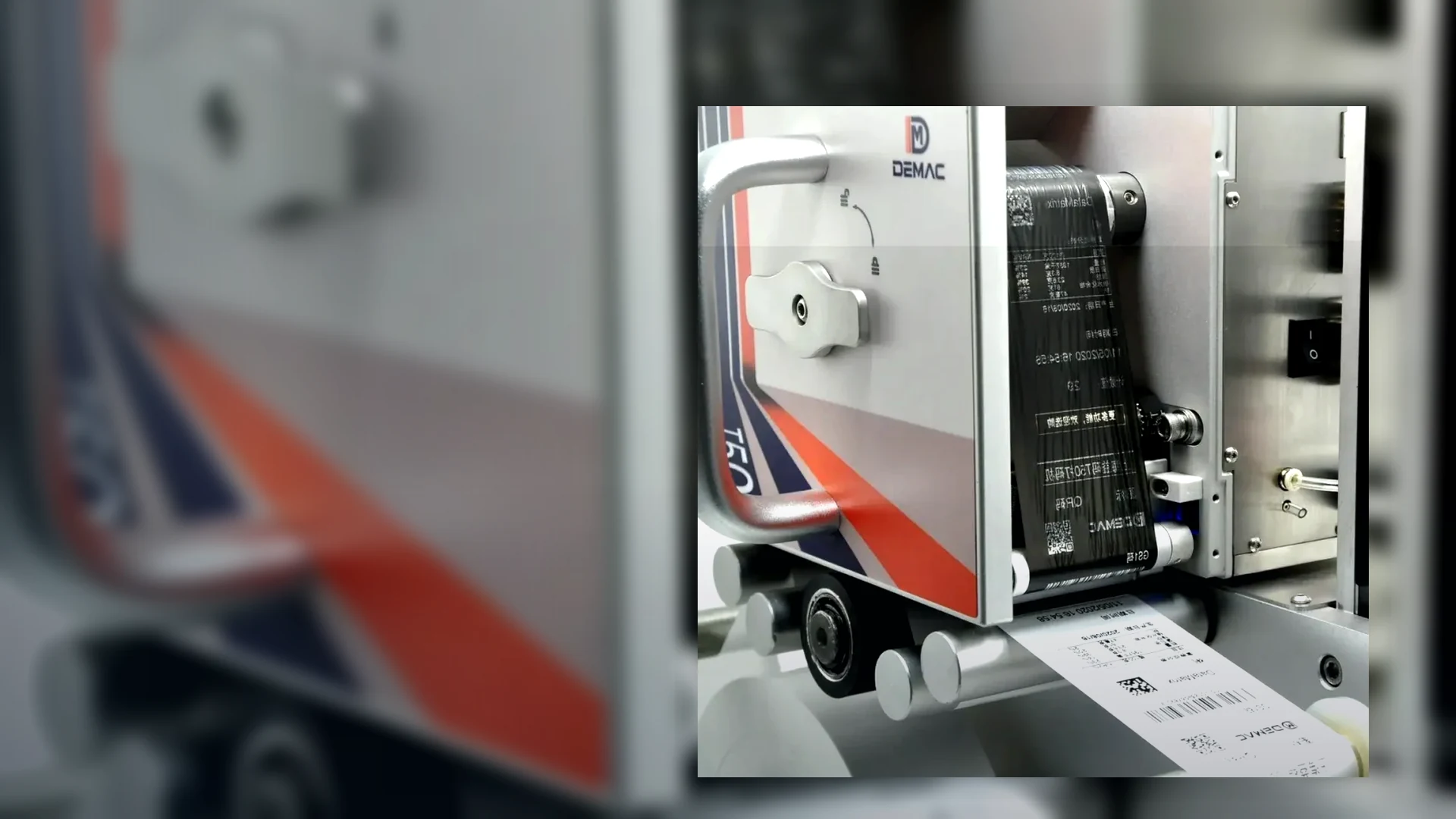
Include printhead width, intermittent or continuous operation, ribbon width and length, cassette handling, host-machine mounting and film synchronisation.
CIJ or labels
Broader inkjet and print-and-apply systems may be the correct route for curved packs, larger throw distances, cases or logistic labels. Include their service and consumable model in the same lifecycle comparison.
Information that turns a budget into a usable quotation
Send representative production samples rather than clean laboratory substitutes. Include every relevant material variant, coating and colour. Mark the preferred code position and state whether the surface can be wet, dusty, cold, oily or subject to downstream abrasion.
Provide the complete worst-case message, including the largest date, batch, serial, barcode, QR or DataMatrix field. Explain how each variable is calculated or sourced and who may edit it.
Describe the line movement: stationary, intermittent or continuous; product pitch; normal and maximum output; acceleration; gaps; web speed; and available print window. Photographs, a short video and dimensioned layout reduce uncertainty.
State the required acceptance evidence. That may include first-off approval, an adhesion or rub test, scanner checks, formal barcode verification, code inspection, reject challenge and recovery after loss of data or printer-ready status.
Coding-machine cost FAQs
How much does a coding machine cost?
There is no reliable single figure because the technology, print width, substrate, mounting, controls, verification, commissioning and support scope can change the project materially. A quotation should separate the printer from integration and lifecycle items.
Is the lowest purchase price usually the lowest total cost?
Not necessarily. Consumable yield, changeover time, cleaning, downtime, reject handling, spare parts and operator effort can outweigh the initial price difference over the life of the equipment.
What information is needed for an accurate coding quotation?
Provide production samples, the complete code artwork, pack dimensions, line movement, normal and maximum output, available mounting space, data source, inspection requirement, utilities and the expected changeover pattern.
Should vision inspection be included in the first budget?
Include it when the process requires automatic confirmation of code presence, content, position or machine-readable symbols. The camera, lighting, tracking, reject or stop response and challenge testing should be priced as one controlled function.
Can Lancing compare several coding technologies?
Yes. The comparison is strongest when every option is tested against the same substrate, message, production movement and acceptance criteria rather than against different demonstration conditions.
Request a coding quotation on a common scope
Send the pack, message, line movement, data route and acceptance requirement. Lancing can identify the information still needed before pricing a credible coding station.