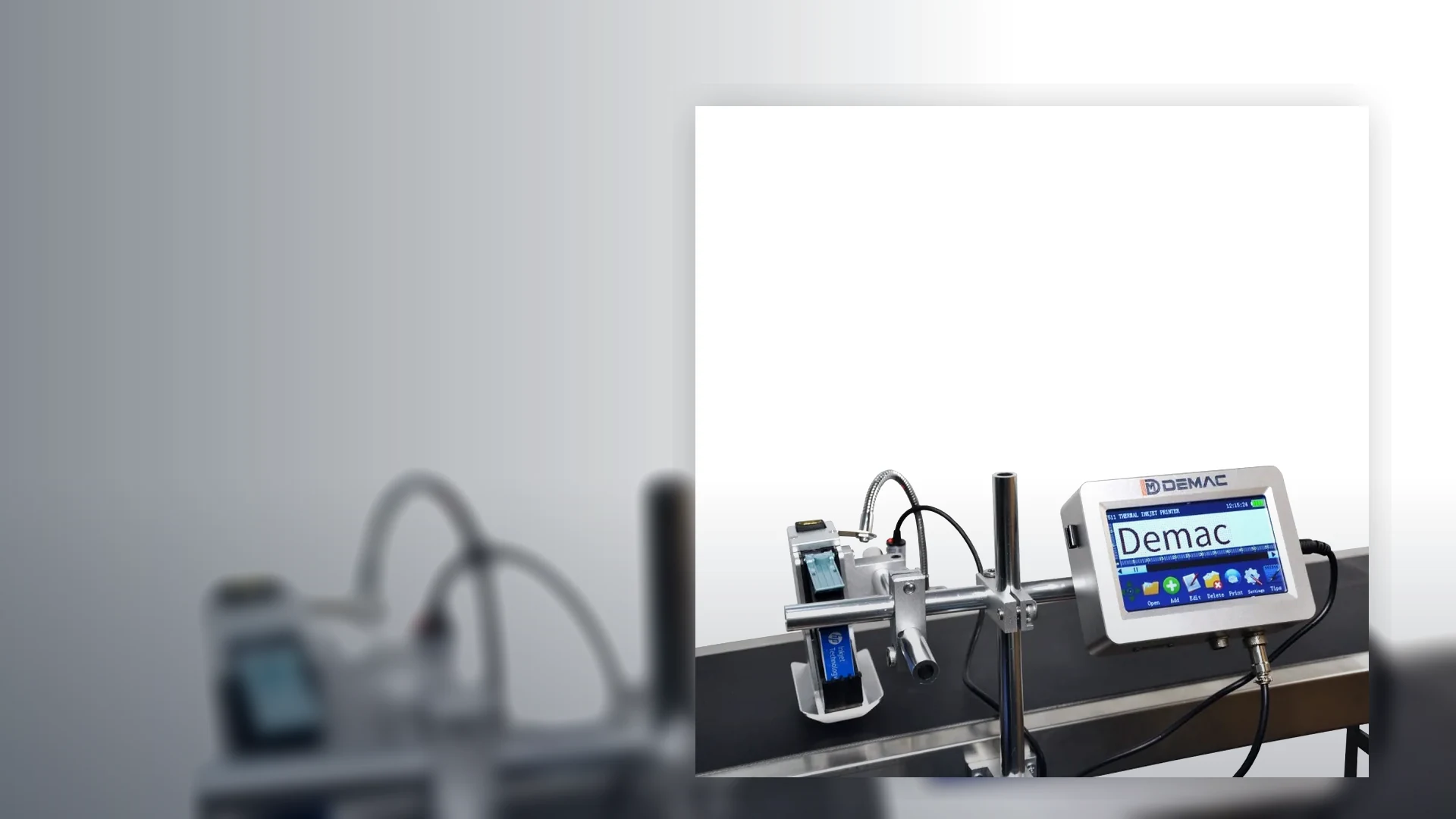
Coding machinery applications
Date coding and traceability marking for labels, bottles, cartons, packaging films, pouches, bags and complete automated packaging lines.
Application routes
Different packaging formats need different coding technology. Use these common routes to prepare your enquiry.
Label coding before application
Print date, batch and variable information onto labels before automatic label application.
VFFS, bags and pouches
Print onto packaging films before forming and sealing, including bags, pouches and flexible packs.
Bottles, cartons and containers
Use inkjet and suitable direct marking systems for codes, barcodes and QR codes on packaging surfaces.
Serialisation and data-rich codes
Plan batch, serial, shift, barcode, QR code and DataMatrix data before choosing the final platform.
Packaging machine integration
Specify coder timing, triggering, sensors and print position against the filling, sealing or labelling machine.
Print and apply
For one-to-one identification such as address labelling or unique product labels, consider print-and-apply machinery.
What to check before choosing a coder
- Material: label stock, film, pouch, bottle, carton or other substrate.
- Print content: date, batch, logo, QR, barcode, nutrition table or serial number.
- Line behaviour: intermittent or continuous motion, speed, available dwell time and trigger point.
- Operating environment: temperature, humidity, dust, washdown expectations and access for operators.
More application-specific coding routes
These pages connect common packaging applications to the most suitable coding technology and specification details.
Match the coding route to the pack and the production movement
Pack shape alone does not decide the printer. The material, code position, motion at the print point and required durability should be considered together.
| Application | Likely routes to compare | Critical sample or line checks | Common reason for failure |
|---|---|---|---|
| Labels before application | Hot foil, thermal inkjet, TTO or a dedicated label-printing route. | Label stock, backing web movement, print position, label sensor and downstream applicator. | The code is placed where the applicator, wrap belt or product contact later damages it. |
| Flexible film, VFFS or flow wrap | TTO is normally the first comparison; simple intermittent marks may also suit hot foil. | Film construction, treated surface, web speed, registration, print window and sealing heat. | Wrong ribbon/substrate combination, unstable web or insufficient dwell at the print point. |
| Cartons and sleeves | Thermal inkjet, offline friction feeding or print-and-apply depending on the pack state. | Coating, colour, flatness, feed orientation, code location and dry time before stacking. | Glossy or coated stock is approved without testing the production ink and handling route. |
| Bottles, jars and containers | Thermal inkjet or a specialist non-contact inkjet route; label coding may be preferable. | Curvature, stability, print distance, sensor position, line speed and wet or oily surfaces. | Variable presentation causes code position drift or the selected ink does not adhere. |
| Cases and logistics packs | Inkjet, large-character coding or print-and-apply. | Case colour, porosity, required barcode size, data source, label face and scan distance. | The solution is chosen before the barcode or retailer specification is defined. |
Approve the complete application, not only the printer
A coding station includes product control, triggering, mounting, data selection, consumables, inspection and operator access.
Presentation and trigger
The pack must reach the print point in a repeatable position. Confirm sensor type, trigger delay, conveyor or web stability and whether an encoder is needed to follow speed variation.
Message and data source
Agree who owns each field, how the correct job is selected and what prevents an old date or batch message remaining active after changeover.
Verification and response
Decide whether operators visually inspect the code, use a scanner or vision system, and what happens when the result is missing, wrong or unreadable.
Related application planning guides
Use these pages to build the evidence and integration requirements before committing to a coding route.
Print quality and substrate approval
Plan adhesion, rub, contrast, code-position and scanner checks using production materials.
Triggers, encoders and line data
Define how the coder receives timing and message data and how a failed code is handled.
Complete packaging-line integration
Use Packaging Lines UK when the wider project includes fillers, cappers, labellers, conveyors, inspection and end-of-line equipment.
Application guides by pack geometry
These routes add the web, container and secondary-packaging detail needed to move from a broad pack type into an engineering trial.
Sachets and stick packs
Intermittent or continuous film movement, print windows, registration and seal clearance.
Trays and lidding film
Flat-web coding, finished-tray position, sealing, cooling and inspection.
Jars and tubs
Lids, labels, bases and curved walls with changing product temperature and moisture.
Cans and metal containers
Reflectivity, curvature, condensation, product rotation and vision lighting.
Outer cases and shipping cartons
Direct print or labels, logistics data, conveyor tracking and barcode quality.
Direct coding versus labels
Choose the route from information area, surface, changeover, consumables and verification.
Send the finished pack and the production movement
A sample trial should reproduce the real material, code position, complete message and downstream handling.
Choose the coding route by pack state and movement
Pack geometry matters, but the point at which the surface becomes stable and the data becomes available often decides the final layout.
Moving product or container
Confirm product guidance, trigger position, print distance, speed variation and the first downstream contact. Curved or unstable containers may need side belts, guides or another coding position.
Indexed or continuous web
Define the print window, web direction, artwork registration, cut and seal positions, encoder information and film support before selecting intermittent or continuous TTO.
Flat pack before production
Cartons, sleeves, cards and suitable pouches may be fed and coded offline. Prove separation, doubles control, code placement and quantity reconciliation across the full pack range.
Compare inline and offline packaging coding and review substrate and consumable selection.