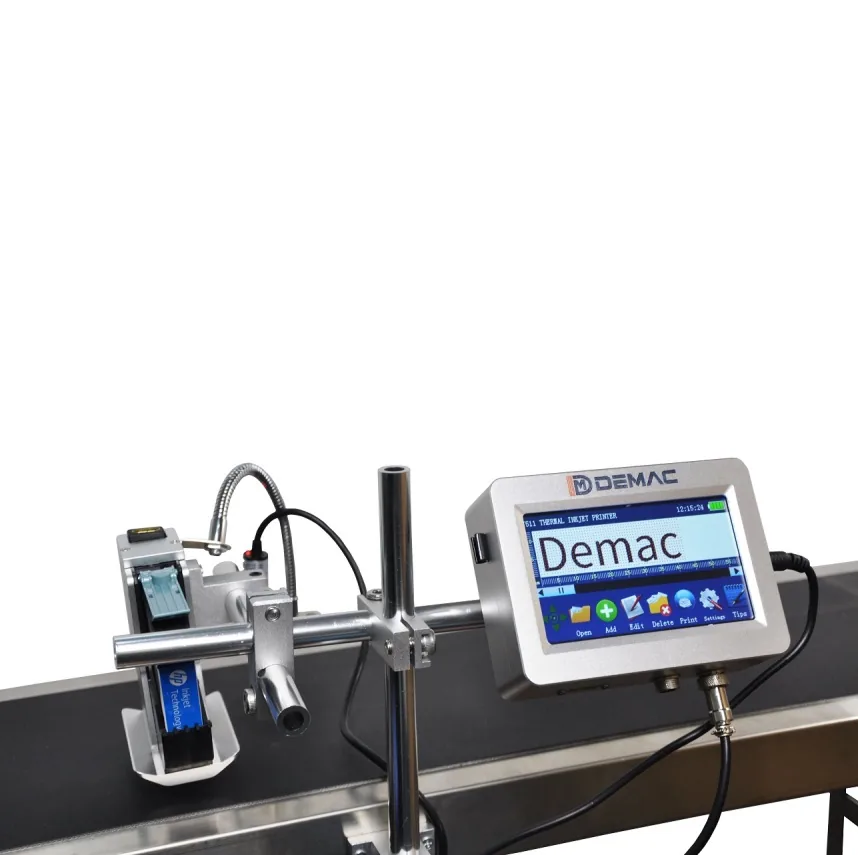
Porous versus non-porous packaging coding
Understand how absorbency, coating, surface treatment, contamination and downstream handling affect thermal inkjet, TTO and hot-foil coding.
A porous surface absorbs part of a liquid ink; a non-porous surface keeps the ink mainly on the surface, so adhesion, drying and resistance depend more heavily on the ink chemistry and surface condition.
Paper and uncoated board are often porous, while coated cartons, films, plastics, glass and metal are commonly non-porous or only partly absorbent. The visual description is not enough: use the exact production material, treatment, coating and contamination condition in the trial.
| Material behaviour | What it can mean for coding | What to test |
|---|---|---|
| Absorbent paper or board | Liquid ink may penetrate quickly, but spread can reduce fine-edge definition on some stocks. | Character edge, barcode definition, show-through, drying and material variability. |
| Coated carton or label | The coating may reduce absorption and create a surface closer to a non-porous substrate. | Adhesion, drying time, rub resistance and supplier/coating variants. |
| Plastic film or pouch | Surface treatment, additives, slip agents, gloss and web movement can affect ink or ribbon transfer. | Treated side, ribbon/ink grade, code position, seal heat, flexing and downstream contact. |
| Plastic bottle, glass or metal | Curvature, condensation, oil, mould-release residue and reflective surfaces can affect contrast and adhesion. | Cleaning condition, print distance, product guidance, drying, rub and scanner performance. |
Match the coding process to the surface and movement
Substrate behaviour is one decision. Message size, pack movement, print window, environment and downstream handling can make another technology more suitable even when more than one can mark the material.
Thermal inkjet
The J511 information lists quick-dry eco, water-based and oil-based ink options. Select the cartridge by the actual substrate and resistance requirement, then hold print distance and product presentation stable. Do not assume one cartridge will perform equally on paper, coated board, plastic, glass and metal.
Thermal transfer overprinting
TTO transfers a ribbon-based image onto flexible material. Approve ribbon grade, printhead settings, web support and the finished-pack handling. Film flexing, seal heat, abrasion and contact with forming or conveying parts should be included.
Hot foil
Hot foil uses heated type and ribbon during a controlled print cycle. Material response depends on ribbon, temperature, pressure, dwell and support behind the print area. Check distortion, transfer, type depth and repeatability across the intended operating window.
A repeatable substrate and consumable test
Use one written method so different materials, ink cartridges or ribbons can be compared fairly.
- Identify the material. Record supplier reference, coating, colour, treatment, printed side and any accepted alternatives.
- Condition samples. Reproduce normal temperature, humidity, condensation, oil, dust, product splash or cleaning condition where relevant.
- Print the full job. Use the largest message, smallest character and every machine-readable symbol expected in production.
- Run the real movement. Test normal and maximum speed, pitch, starts, stops and the actual print distance or web support.
- Allow the real set time. Check the code at the point it first touches a belt, guide, seal, label, operator or secondary pack.
- Challenge the finished pack. Use the agreed rub, handling, storage, scanner or verifier method and record pass/fail limits.
Questions about packaging surface selection
Can the material name identify the right ink?
No. “Plastic”, “carton” or “label” is too broad because resin, coating, treatment, colour, surface energy, additives and contamination can vary. The cartridge or ribbon should be approved against a traceable production material reference.
Why can a code pass immediately and fail later?
A fresh mark may be touched before it has set, exposed to seal heat, flexed, rubbed, chilled, condensed on or contacted by oil and product. The acceptance check should reproduce the handling sequence that matters to the finished pack.
Does high resolution solve an adhesion problem?
No. Resolution affects dot placement and detail; adhesion depends on the consumable, substrate and process condition. A sharp code that rubs away or fails after condensation is still unsuitable.
When should another technology be trialled?
Compare another route where the pack cannot be presented consistently, the environment is outside the published operating range, the print window is too short, the surface remains wet or contaminated, or the approved resistance cannot be achieved with the first consumable family.
Substrate information to send with an enquiry
- Production material and supplier reference, including coating, treatment and printed side.
- Flat and finished samples, colour variants and any alternative material suppliers.
- Full code artwork, code area and machine-readable requirements.
- Line movement, print distance, normal and maximum conditions.
- Expected moisture, heat, abrasion, oils, cleaning and downstream contact.
Approve the consumable and pack as one combination
Send real samples and the full process condition so Lancing can define a useful ink, ribbon or hot-foil trial.