Coding machine selection guide
Coding machinery UK

Coding machine selection guide

How to choose between hot foil coders, thermal inkjet printers, thermal transfer overprinters, offline label printers and print-and-apply machines.

Start with the code, material and machine movement

A coding system should be selected around the pack material and the data you need to print. The wrong technology can create poor adhesion, unreadable barcodes or line downtime.

Hot foil coding is the most economical route for short and repeatable date or batch codes. It suits simple applications where the printed message is limited and the operator can manage type changes.

Thermal inkjet is a flexible option when the message needs dates, times, logos, batch lots, barcodes or QR codes with a better print quality than hot foil. It is useful for direct coding and carton or label applications.

Thermal transfer overprinting is the strongest fit for high-quality variable print on flexible films, particularly where VFFS, flow wrapping or pouch machinery needs code quality, barcode readability and traceability data.

For unique product identification or address labelling, print-and-apply machinery may be the correct route rather than direct coding.

Information to provide for a quotation

Pack details

Material, colour, finish, print position, available print area and whether the surface is moving or stationary.

Code details

Date format, batch format, number of lines, barcode, QR code, logo, serialisation and data source.

Line details

Speed, intermittent or continuous movement, machine make, trigger point, utilities and operator access.

A practical coding-machine decision sequence

Do not start with a product name. Eliminate unsuitable technologies through the application evidence in a consistent order.

DecisionHot foilThermal inkjetThermal transfer overprint
Pack or web movementNormally intermittent and stationary during the print cycle.Normally a moving product or substrate with stable presentation and trigger.Intermittent or continuous variants selected to match the packaging web.
Typical messageShort date, batch or simple text using physical type.Dates, batch, serial, logo, barcode and QR data within the approved layout.Dense variable text, logos, barcodes, QR/DataMatrix and larger film layouts.
Change frequencyManual type changes; best where messages are simple and change less often.Software job changes and real-time fields.Software job changes, variable data and template control.
Material focusCompatible labels and films confirmed by ribbon trial.Porous or non-porous materials confirmed by ink trial.Flexible packaging film confirmed by ribbon trial.
Key limitation to testPrint area, dwell, type accuracy and ribbon transfer.Ink adhesion, dry time, print distance, product control and contrast.Film/ribbon match, web synchronisation, print window and ribbon consumption.

Five gates before a coding machine is approved

1. Application gate

Real substrate, complete message, print position, line movement and operating environment are documented.

2. Capability gate

The verified print area, resolution, speed range, interfaces and utilities cover the application without unsupported assumptions.

3. Sample gate

Production material is printed with the intended ink or ribbon and inspected after realistic handling.

4. Integration gate

Mounting, trigger, encoder, job data, ready/fault signals, verification and reject or stop logic are defined.

5. Support gate

Operators have a changeover and first-off process, with consumables, cleaning, spares and escalation routes agreed.

Failure modes to expose during the trial

A useful test deliberately challenges the conditions most likely to create a bad or incorrect code.

Physical failure

Pack wander, variable print distance, loose mounting, film movement, contaminated surface, rub or heat after printing.

Message failure

Wrong job, expired date rule, incomplete variable data, unauthorised editing or old message remaining after changeover.

Control failure

Blocked sensor, speed change, lost communications, printer not ready, missed verification or failed reject action.

Documents to retain after approval

Application record

Pack and substrate reference, artwork, print position, speed, environment and host-machine details.

Approved settings

Printer job, ink or ribbon reference, energy or quality settings and communication or trigger configuration.

Acceptance evidence

First-off samples, inspection result, fault tests, operator procedure and agreed maintenance or consumables list.

Move from selection into proof

Continue with the print quality and substrate testing guide and the line integration guide.

Review an application

Use mandatory gates before a weighted machine comparison

A low purchase price or high headline speed should not compensate for failure on the substrate, machine motion, code requirement or production-control method.

Start with pass-or-fail gates. The shortlisted technology must print the complete message inside the available area, adhere to the production material, operate with the host-machine movement and meet the agreed verification method. A machine that fails one of those gates should not progress to a weighted commercial comparison.

After the mandatory gates are passed, score the practical differences: changeover time, consumable handling, operator access, cleaning, data control, integration effort, fault recovery, support and expected production pattern. Apply weights that reflect the actual process rather than using the same scorecard for every factory.

Use evidence, not brochure labels. A statement such as “high resolution” should be translated into the smallest required text or symbol on the real pack. “High speed” should be translated into good coded packs at the intended message length, product pitch and line movement. “Network ready” should be translated into a proven data protocol and recovery state.

Keep ownership boundaries clear. This site compares hot foil, the verified J511 thermal inkjet option and T30/T50 thermal transfer overprinting. Broader continuous inkjet, handheld and case-coding choices belong on Lancing’s specialist inkjet machinery site. Variable labels printed and applied on demand belong on the labelling and print-and-apply site.
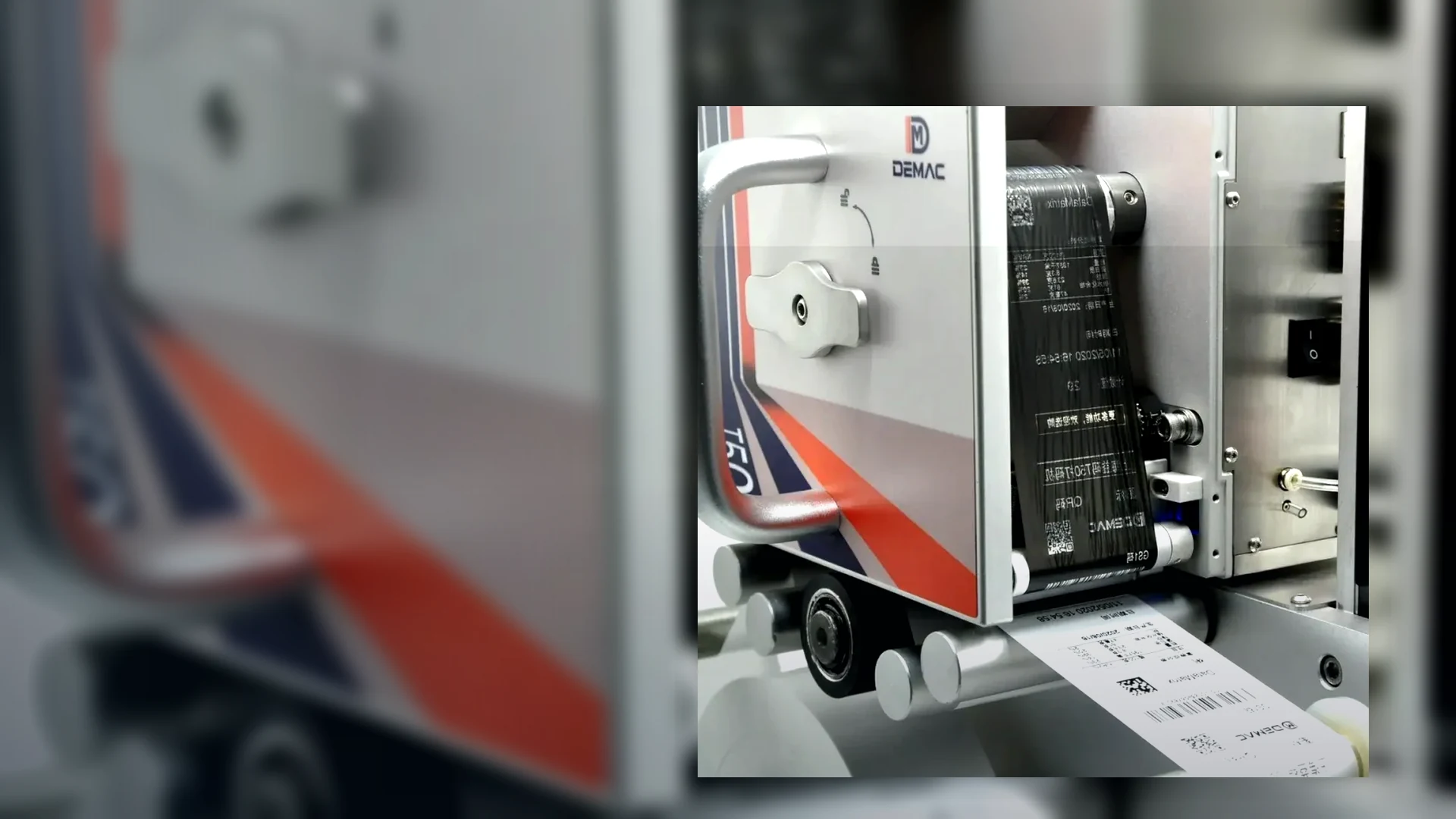
Coding-machine selection scorecard

Define the evidence and weighting before demonstrations so each supplier or technology is judged against the same application.

CriterionMandatory gate or weighted factorEvidence to compare
Substrate and durabilityMandatory gateProduction material, approved ink or ribbon, dry or cooling time, rub and environmental exposure after downstream handling.
Message and print areaMandatory gateLargest real job, smallest text, dates, batches, graphics and every barcode or 2D-code type inside the available coding area.
Machine movementMandatory gateIntermittent or continuous motion, normal and maximum speed, product pitch, print window, starts, stops and registration.
Verification and fault responseMandatory gateFirst-off method, in-process check, known bad samples, stop or reject action and product reconciliation after a fault.
Changeover and operator workloadWeighted factorTime and steps for job selection, type, cartridge or ribbon changes, cleaning, access control and approval of the first good pack.
Data and integrationWeighted factorTrigger, encoder, PLC or network interfaces, field mapping, message ownership, printer states and communications-loss recovery.
Consumables and maintenanceWeighted factorMeasured use from the approved message, storage life, waste, cleaning routine, wear parts, critical spares and support route.
Lifecycle fitWeighted factorSKU range, future message complexity, production calendar, planned line changes and ability to retain controlled job and acceptance records.

Hot foil route

Best assessed where the message is short and repeatable, the print window is intermittent and manual type control is acceptable. Review the hot foil coder.

Thermal inkjet route

Assess cartridge and substrate together where high-resolution digital data is needed on controlled surfaces. Review the J511 TIJ printer.

TTO route

Assess printhead width, film movement, ribbon and host-machine timing where flexible packaging needs dense variable print. Review the T30 and T50 TTO range.

Compare machines against one controlled application

Use the same pack, message, speed, handling and acceptance checks for every shortlisted route.

Review a coding shortlist

Keep one application record through selection, quotation and acceptance

Use the same approved samples, complete message, production movement and pass criteria at every stage so a simplified demonstration does not replace the real duty.

Start a controlled comparison

Questions that strengthen a coding-machine selection decision

A defensible shortlist eliminates unsuitable technologies first, then compares the remaining options on one controlled application and acceptance scope.

Which requirement should eliminate a coding technology before commercial comparison?

Any mandatory requirement that the technology cannot satisfy should remove it before price or preference is scored. Typical gates include the pack movement, available print window, substrate compatibility, required code area, machine-readable content, environmental exposure, line interface and the ability to complete the agreed acceptance test.

Record each gate as a pass or fail with supporting evidence. A weighted score should compare only the options that have already passed every mandatory requirement.

When is a sample print insufficient for machine selection?

A sample print is insufficient when it does not reproduce the production movement, final code location, complete message, substrate condition or downstream handling. It may prove that a printer can make a mark, but not that the integrated coding station will produce the right code on every relevant pack condition.

Move from a flat sample to an application trial when timing, registration, curvature, condensation, abrasion, data transfer or automatic inspection can change the result.

How should production, quality, engineering and procurement divide the approval decision?

Production should confirm operation and changeover, quality should define code and evidence requirements, engineering should approve mechanical, electrical and controls integration, and procurement should compare the complete commercial scope. The final decision should use one shared application record so each function is approving the same machine duty.

Separating responsibilities prevents a low-cost printer being selected before integration or acceptance requirements are included. The URS guide provides a common structure.

What evidence makes two supplier quotations genuinely comparable?

Two coding quotations are comparable only when they address the same production samples, full message, speed and movement, mounting position, data route, inspection response, utilities, commissioning and acceptance tests. A lower price may otherwise reflect an omitted bracket, sensor, software interface, trial, reject function or support item.

Use the coding evidence guide to define the records that should be delivered with the accepted system.

Compare coding options on one controlled application

Send the mandatory requirements, production sample, full message, line movement and acceptance method.

Review the coding shortlist
Contact us