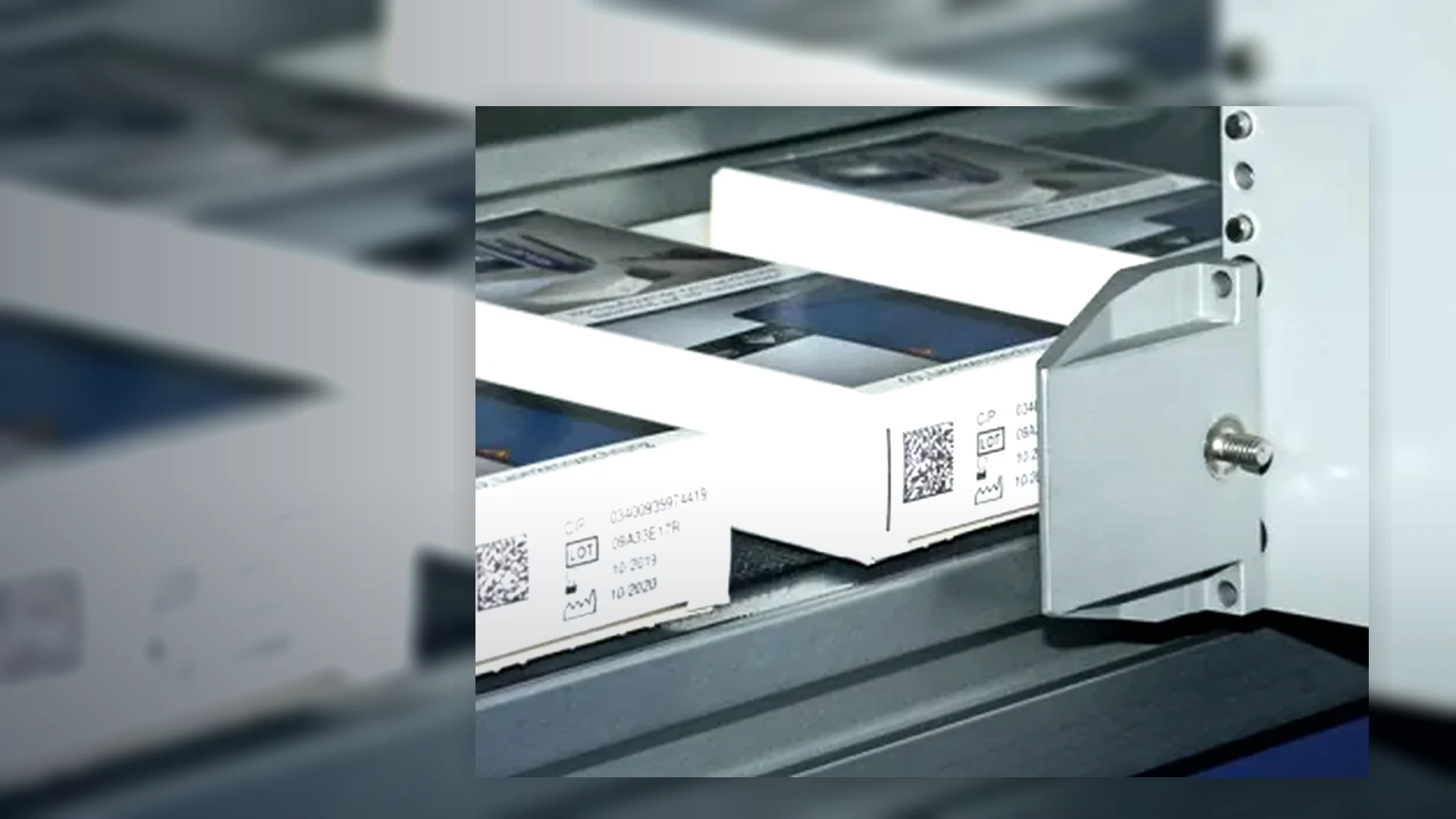
TIJ versus CIJ coding for packaging
Thermal inkjet and continuous inkjet are both non-contact printing technologies, but they suit different production conditions. The correct choice depends on the pack surface, geometry, movement, code, environment and maintenance model.
Compare the production window, not only the print sample
Both technologies can print dates, batches and variable information, but a sample produced under ideal conditions does not show product handling, ink drying, maintenance or behaviour at line speed.
| Selection area | Thermal inkjet (TIJ) | Continuous inkjet (CIJ) |
|---|---|---|
| Strongest application pattern | High-resolution coding on cartons, labels, sleeves and other consistently presented surfaces; selected inks can extend the substrate range. | Frequently considered for moving bottles, containers and varied product geometry, including applications needing a more flexible non-contact print position. |
| Ink system | Ink and much of the jetting mechanism are contained in a replaceable cartridge. | Ink circulates through the printer and normally involves an integrated fluid-management and service routine. |
| Print distance and presentation | Usually benefits from a controlled, close print gap and stable surface. | Often offers more tolerance for curved or irregular products, subject to model, code height and application. |
| Message and quality | Often selected for crisp text, logos, barcodes and 2D symbols where the substrate and speed support the required result. | Strong for compact alphanumeric codes on high-speed production; model capability for graphics and machine-readable symbols varies. |
| Maintenance model | Cartridge replacement can renew the printhead element, but nozzle care, storage and correct cartridge handling remain important. | Requires the maintenance, cleaning and fluid practices specified for the selected machine and operating pattern. |
Five questions that usually decide the shortlist
What is the real surface?
Cardboard, coated carton, label, plastic, glass, metal and film need different ink and presentation decisions. Use a production sample with the final artwork and surface treatment.
How does the product move?
Record speed, pitch, acceleration, product rotation, gaps, vibration and the distance available between sensor, printhead and downstream contact.
How complex is the code?
Character height, number of lines, logo, barcode, QR or DataMatrix size and variable-data frequency change the print window and inspection requirement.
What is the environment?
Temperature, humidity, dust, washdown boundary, vapour, condensation and production cleanliness can affect ink, drying, printer housing and maintenance.
How will it be maintained?
Compare cartridge or fluid handling, planned cleaning, shutdown procedure, service skills, spares and the consequence of extended idle periods.
How will it be verified?
Define first-off checks, OCR/OCV, barcode decode, formal verification or reject logic before selecting the printer and line position.
Where the verified J511 TIJ fits
The supplied J511 data describes a thermal inkjet printer with up to 600 dpi print accuracy, 1–8 adjustable lines, 1.0–12.7 mm print height, real-time date and batch functions and support for logos, barcodes and QR codes.
- Use the J511 thermal inkjet product page for the complete verified specification.
- Confirm the selected quick-dry, water-based or oil-based ink against the exact substrate.
- Prove code position and drying at the agreed line speed and print distance.
- Check the full message and data route, not only a static date sample.
- Record cartridge, settings and sample identity for repeatable approval.
When to continue into the CIJ route
Where the product is curved, irregular, moving quickly, presented with a variable gap or requires a specialist ink and print position, assess the broader range rather than forcing a TIJ installation.
Lancing's Inkjet Coder product guide covers CIJ, TIJ, large-character and handheld inkjet categories.
Trial conditions for a fair TIJ and CIJ comparison
Same pack
Use identical material, colour, coating, cleanliness, temperature and print location.
Same message
Use the complete worst-case text and machine-readable content at the required size.
Same movement
Reproduce speed, gaps, acceleration, product rotation and print distance as closely as practical.
Same acceptance
Apply the same readability, adhesion, rub, decode, reject and changeover criteria to both technologies.
Operating-cost questions to include
Estimate print volume and coverage using the full message. Compare cartridge or fluid use, start-up and shutdown waste, cleaning materials, planned service, wear parts and storage of consumables.
Record the production consequence of a blocked or weak print, an empty cartridge, fluid warning or extended idle period. The operational response matters as much as the consumable unit price.
Include the time required for job change, first-off approval, printhead positioning and product-format adjustment. A technology that prints well but is difficult to restore after every changeover can create hidden labour and quality risk.
Finally, compare support and spares against the site's capability. The intended maintenance model should be understood by production and engineering before the machine is accepted.
TIJ versus CIJ FAQs
What is the main difference between TIJ and CIJ?
TIJ uses replaceable thermal inkjet cartridges to create high-resolution marks, while CIJ circulates ink continuously and projects droplets through a printhead. Their operating windows, inks, maintenance and strongest applications differ.
Is TIJ suitable for plastic packaging?
It may be, using an ink intended for the specific non-porous material and production condition. Drying, adhesion, throw distance and downstream handling must be tested on the actual pack.
Why is CIJ often used on bottles and fast lines?
CIJ is commonly considered for moving, curved or irregular products and applications that benefit from a flexible non-contact print position. The exact printer and ink must still be selected and trialled.
Which technology gives better print resolution?
TIJ is often selected where high-resolution text and 2D content are priorities on a consistently presented surface. The required symbol size, line speed, substrate and inspection result should determine the choice rather than resolution alone.
Does Lancing supply both TIJ and CIJ routes?
This site presents the verified J511 thermal inkjet option. Broader CIJ, handheld and large-character inkjet requirements are covered through Lancing’s specialist Inkjet Coder site.
Test TIJ and CIJ against one controlled application
Send the production pack, full code, line speed, product movement and environment. Lancing can identify the most credible print trial route.