
Date and batch coding guide
Plan date codes, batch numbers, lot marks, serial numbers, barcodes and QR codes before selecting coding machinery.
Traceability starts with the print specification
Date and batch coding is not just a printer purchase. It affects product traceability, pack presentation, barcode readability and operator workflow.
- Confirm the exact date format and whether time, shift or line number is needed.
- Define batch lot format and any automatic serial number requirement.
- Check barcode and QR code size, contrast and verifier requirements.
- Allow for operator edits, password protection and changeover controls where required.
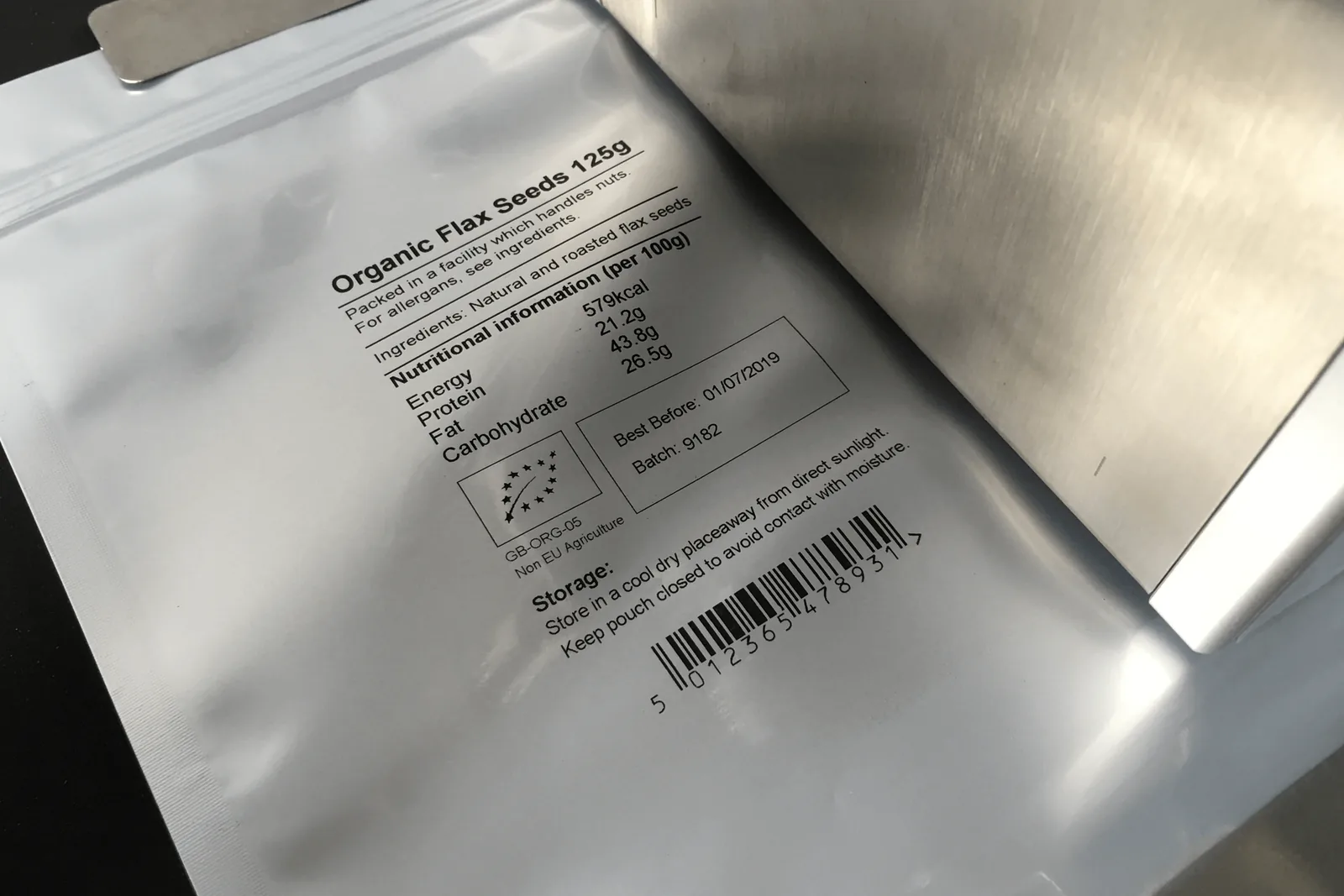
Typical print content
Control the date and batch message through every production state
The key risk is not only poor print quality; it is a clear code containing the wrong information.
Create a message specification for each product family. Record field names, date or expiry calculation, batch or lot source, number of lines, character size, barcode or 2D data and human-readable text. Where customers own the format, retain the approved reference rather than rebuilding it from memory during setup.
Define job selection. For manual systems, restrict editing and require a second check or signed first-off sample. For database, PLC, ERP or MES transfer, define which system owns the job, how a change is acknowledged and what happens after invalid data or a lost connection.
Line clearance should remove old labels, film, cartons and samples before the next job starts. Confirm the printer display and physical message match the production order. A previous batch code left active for even a short run can create a larger traceability problem than a visibly missing print.
During production, check at a frequency appropriate to the process. Repeat the check after a consumable change, printer fault, line stop, software restart or product change. Retain evidence in the form required by the customer’s own quality system.
At the end of a run, close the job deliberately. Record unused or rejected product, remove old message material and confirm the next job cannot start with the previous code by default.
Date and batch coding acceptance table
| Check | Question | Evidence |
|---|---|---|
| Content | Does the printed date, batch or lot value match the authorised job and calculation rule? | Approved job display and first-off sample. |
| Position | Is the entire code inside the agreed area after the pack is formed, labelled or sealed? | Finished-pack samples at normal and maximum speed. |
| Quality | Is the code complete, contrasting, adhered and readable after expected handling? | Recorded sample, rub or exposure check and scanner/verifier result where required. |
| Changeover | Can the old job or physical type remain active after the next product starts? | Line-clearance and job-selection procedure challenge. |
| Fault response | What happens after printer fault, missed mark, wrong data or failed verification? | Proven stop, alarm, reject or hold response. |
Troubleshooting boundaries
Use these checks before changing print energy, ink or ribbon, because the root cause may sit elsewhere in the line.
Code is in the wrong place
Check product presentation, sensor, trigger delay, encoder, web registration, conveyor speed and mounting before changing the artwork.
Code is pale or incomplete
Check surface cleanliness, ink or ribbon, print distance or pressure, energy, speed, dwell and wear using an approved reference sample.
Code is correct but fails later
Inspect drying or cooling time, downstream rub, heat, condensation, stretch, labels, seals and storage exposure.
Link the coding procedure to the machine trial
Use the print test guide and data-control guide to prepare acceptance evidence.
Document the message rule as a data specification
For each visible and encoded field, state the source, format, length, calculation, update point, permission, fallback and acceptance check.
| Field | Definition | Control question |
|---|---|---|
| Product or SKU | Authoritative identifier and relationship to the printer job and physical packaging material. | How is the selected product confirmed before the first pack is released? |
| Date | Format, calculation, offset, time source, day boundary and approved exceptions. | What prevents an obsolete or manually overridden date remaining active? |
| Batch or lot | Identifier source, format, uniqueness, production scope and rework treatment. | How is the printed batch reconciled with the production record? |
| Barcode or 2D data | Symbology, identifiers, attributes, size, quiet zones, human-readable content and verification method. | Is decoded data compared with the authorised job and checked on the final pack? |
Translate the result into a coding-machine URS and, where GS1 data is involved, use the GS1 2D packaging guide.
Send the complete date and batch rule with the sample pack
Include examples, boundary conditions, authorised overrides, data source and the evidence required before product release.
Separate the approved date rule from the coding-machine setting
For pre-packed food, the responsible food business must determine the correct label information and whether the product requires a best-before or use-by date. UK government guidance distinguishes use-by dates, used where food safety is the issue, from best-before dates, which concern minimum durability and quality. The coding machine should reproduce the authorised rule; it should not be expected to decide the legal date type.
Define the authorised message rule
Record the date wording, date format, shelf-life calculation, time-zone and day-boundary rule, lot or batch source, shift logic and any storage statement that forms part of the approved pack information.
Prove the rule through changeovers
Challenge start-up, product change, day change, clock recovery and manual intervention. A readable print can still be wrong if the job, date calculation or source data is incorrect.
Retain the production evidence
Keep the approved artwork or message specification, first-off sample, relevant settings, operator approval, exception record and reconciliation evidence required by the site's quality system.
Authoritative UK references: GOV.UK food-labelling guidance and mandatory food-label information. Product-specific legal and safety decisions remain the responsibility of the food business and its competent advisers.