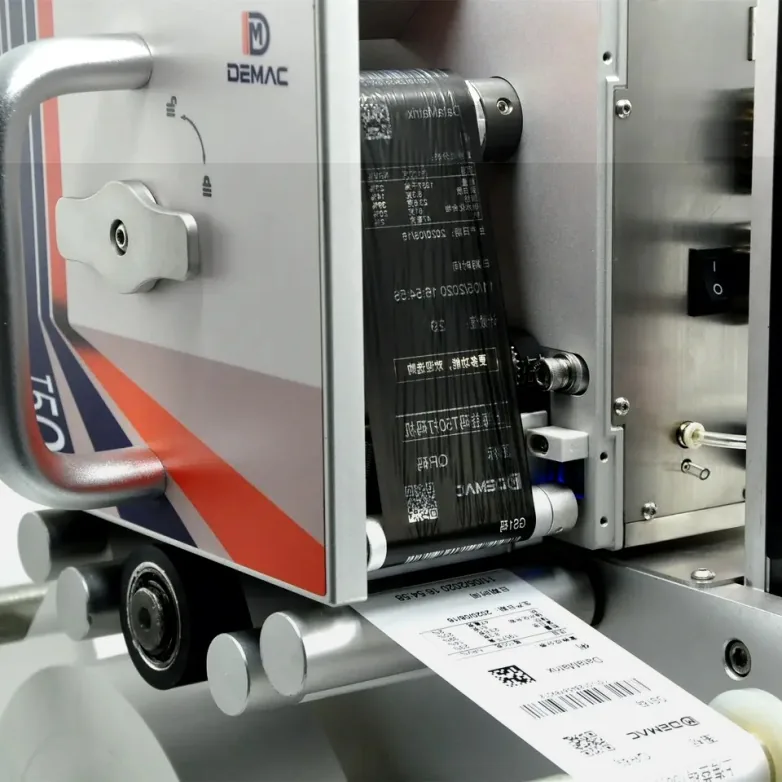
Coding machine installation and line integration
Plan the physical mounting, product presentation, triggering, speed reference, data exchange, inspection and operator access needed for repeatable coding.
A stable code depends on the complete installation
A coding printer cannot compensate for a pack that changes position, a web that moves outside the print window, an unstable trigger or data that arrives too late. Installation should therefore be designed around the product path and control sequence as well as the printer.
| Interface | Installation question | Evidence required before handover |
|---|---|---|
| Mechanical mounting | Can the printhead remain square, stable and within the approved print distance while still allowing safe cleaning and consumable changes? | Mounting drawing, adjustment range, fastener and bracket detail, guarded access and approved print position. |
| Product presentation | Will guides, belts, rollers or film control hold the printing surface consistently through the coding zone? | Pack dimensions, worst-case variation, line video, product pitch and observation through starts, stops and speed changes. |
| Detection and timing | Where should the sensor detect the product, and how will delay or position be referenced? | Sensor type and position, trigger logic, delay settings, missed/double-trigger challenge and recovery sequence. |
| Speed reference | Is fixed timing sufficient, or does print placement need an encoder or host-machine position signal? | Speed range, acceleration, encoder mounting, scaling, slip check and print-position result across the operating range. |
| Data and controls | Which system owns the message, date rule, batch, serial or barcode data, and what happens if communication is lost? | I/O and data schedule, protocol, field ownership, printer-ready states, fault response and recovery test. |
| Inspection and containment | How will a missing, wrong, unreadable or misplaced code be detected and linked to the correct pack? | Inspection rule, tracking method, reject device, reject confirmation, bin-full response and controlled fault samples. |
Installation sequence for an existing packaging line
1. Survey the real line
Record pack flow, direction, speed, pitch, available space, utilities, machine states, guarding, washdown or cleaning needs and the points where the operator must reach the coder.
2. Freeze the code and position
Approve the complete message, variable fields, barcode data, print dimensions, datum and finished-pack location before brackets and sensors are finalised.
3. Define the interface
Document trigger, encoder, start/stop, printer ready, fault, job selection, data transfer, inspection and reject signals with ownership and failure responses.
4. Install for access
Provide stable mounting, protected cables and hoses, clear consumable change access, safe cleaning position and adjustment that cannot drift during normal operation.
5. Commission normal and fault states
Test starts, stops, speed changes, replenishment, changeover, lost trigger, communication failure, printer fault, inspection uncertainty and reject failure.
6. Retain the as-installed baseline
Keep drawings, settings, software versions, approved samples, I/O schedules, maintenance information, training records and final acceptance evidence.
Retrofit and new-line projects need different evidence
Retrofit coding project
A retrofit begins with the limitations of the existing conveyor or host machine. Check mounting space, line access, existing control architecture, available signals, product stability and whether modifications affect guarding, validation or production schedules.
New packaging-line project
A new line allows the code position, product handling, controls and inspection function to be planned together. The coding station should still have a defined boundary so printer capability, line responsibility and acceptance evidence remain clear.
Questions about coding-machine installation
Where should a coding printer be mounted?
A coding printer should be mounted where the target surface is stable, accessible and consistently presented within the approved print distance and angle. The chosen point must also leave room for consumable changes, cleaning, guarding and safe recovery after a jam or stop.
Is an encoder always required for coding?
No. A fixed-speed, repeatable intermittent process may use a controlled delay or host-machine position. An encoder becomes important when web or product speed varies and print position or character geometry must follow actual movement. The decision should be proven across the full speed range.
Which signals should a coder exchange with the PLC?
The required signals depend on the risk and line design, but commonly include job selection or data, print trigger, printer ready, warning, fault, print complete and inspection or reject states. Each signal needs an owner, timing, timeout and defined response if it is missing or contradictory.
How should cables and guarding be planned?
Cables, hoses and encoder connections should be protected from movement, heat, product splash, washdown, abrasion and accidental adjustment. Guarding must control access to hazards without preventing normal cleaning, ribbon or cartridge replacement and observation of the coding process.
What should be checked at commissioning?
Commissioning should prove the approved code and position at normal and limiting operating conditions, then challenge stops, restarts, changeovers, data loss, printer faults, inspection failures and reject confirmation. The result should be retained as the as-installed production baseline.
What information is needed for an installation quotation?
Provide the pack and code specification, line make and model, direction, speed range, pitch, machine movement, installation dimensions, utilities, control platform, required interfaces, guarding constraints and site access. Photos and video should be supported by measured dimensions where fit is critical.
Prepare the installation around the real production line
Send line photos or video, dimensions, pack samples, code artwork, speed range and control requirements for a practical integration review.