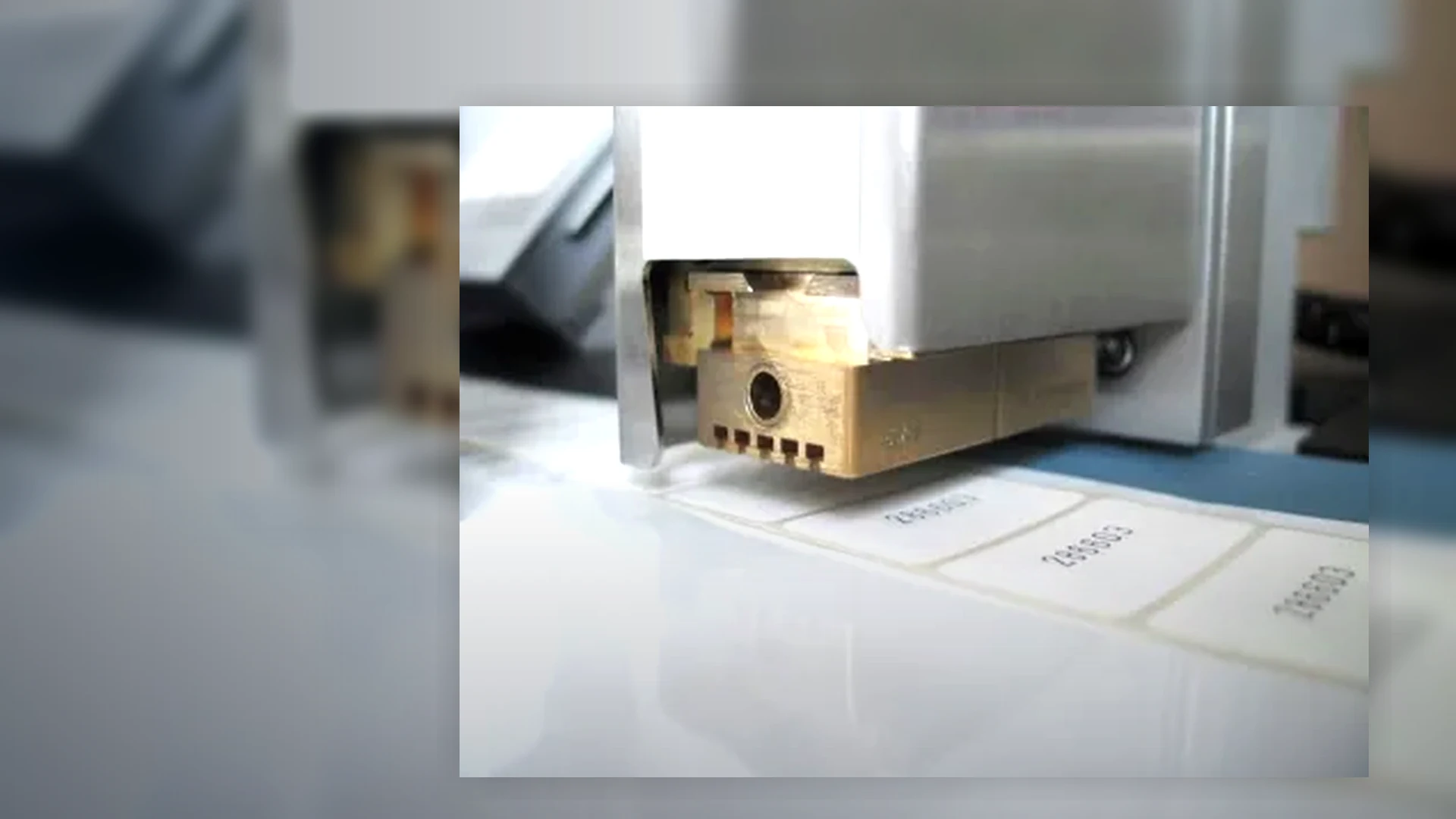
The process uses heated metal characters to transfer wax or resin from a ribbon to the packaging material. That makes it well suited to short, repeatable messages such as a date, lot or batch number. It also explains the main limitation: every message change that alters the characters requires a controlled type change rather than a software-only edit.
Before approving the machine, confirm that the complete message fits the verified print area. The supplied data states 4 × 35 mm for a single line and 8 × 35 mm for two lines, with approximately 15 or 30 characters respectively. Character count depends on the chosen type, spacing and layout, so the actual message should be assembled and trialled rather than inferred from a nominal count.
Ribbon chemistry and the material surface must be considered together. Paper, plastic films and other listed materials can behave differently according to coating, treatment, colour and exposure. The approval sample should use the production ribbon and the real substrate, then be checked after normal contact with belts, guides, sealing jaws, cartons and operator handling.
Hot foil coding normally suits an intermittent print window. The host machine needs to present the material consistently and provide enough stationary time for the print cycle. Mounting rigidity, trigger timing, ribbon advance and pressure affect code position and density. A nominal maximum rate of 80–150 cycles per minute is not a guarantee for every message or host machine; the complete application must be checked at the intended cycle.
Changeover discipline matters because misplaced or reversed type can produce a clear but incorrect code. A practical procedure should include line clearance, message verification against the production order, a signed first-off sample and control of unused type characters. Where messages change frequently or include automatic dates, barcodes or serial numbers, thermal inkjet or TTO may reduce manual intervention.
Routine maintenance is mainly about keeping the type face, ribbon path and print surface clean, checking the holder is secure and replacing worn or damaged characters. The machine should be mounted so operators can carry out those tasks safely without disturbing unrelated settings or reaching through moving equipment.