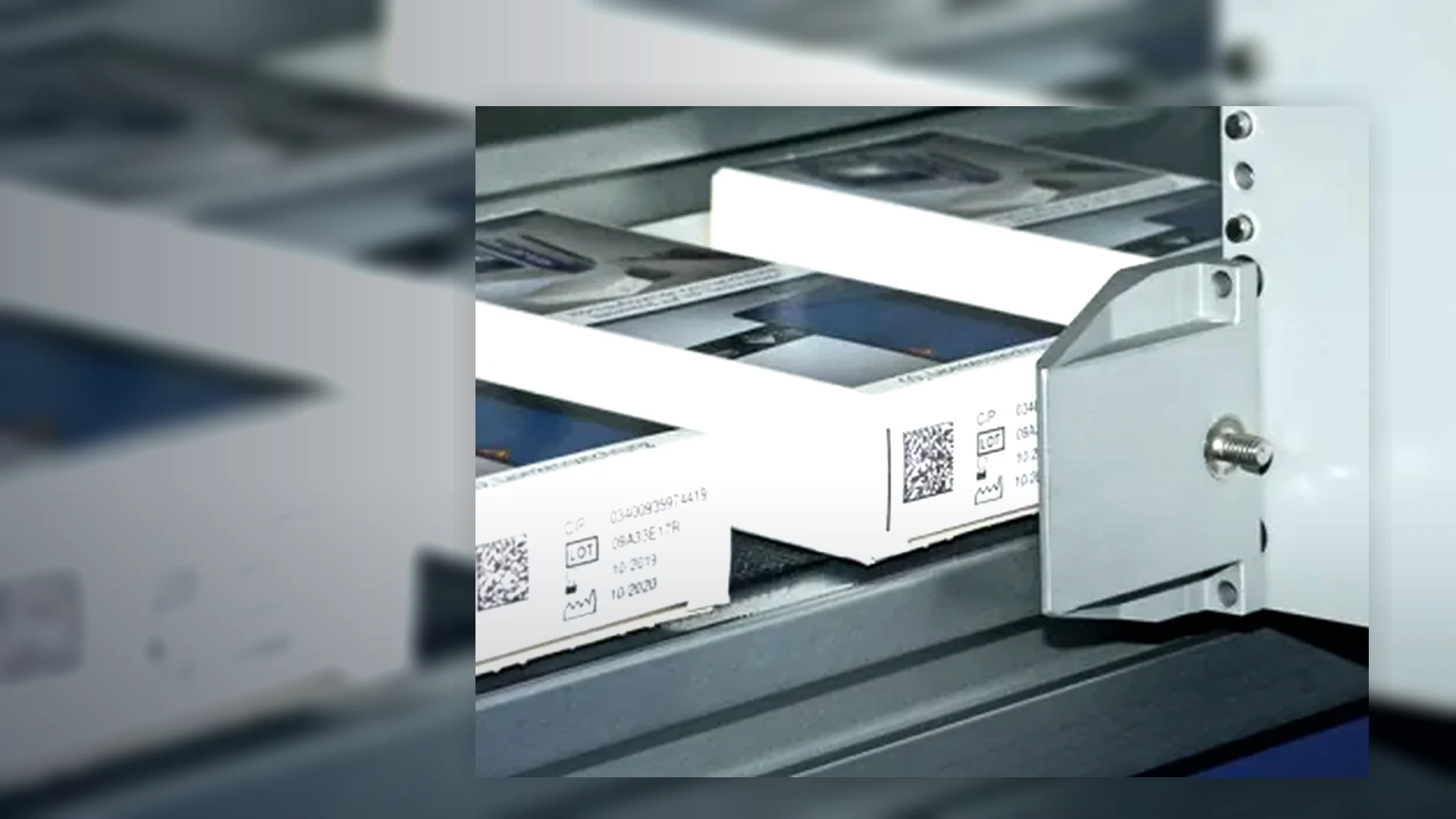
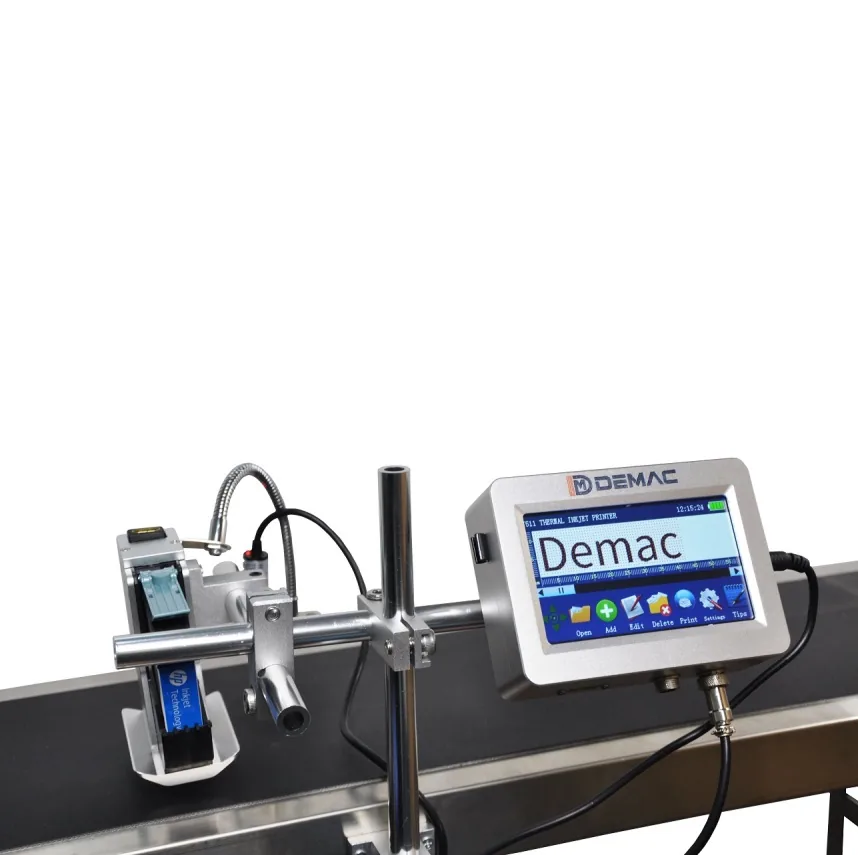
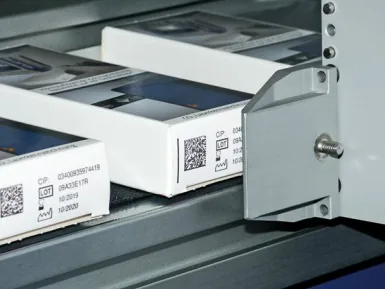
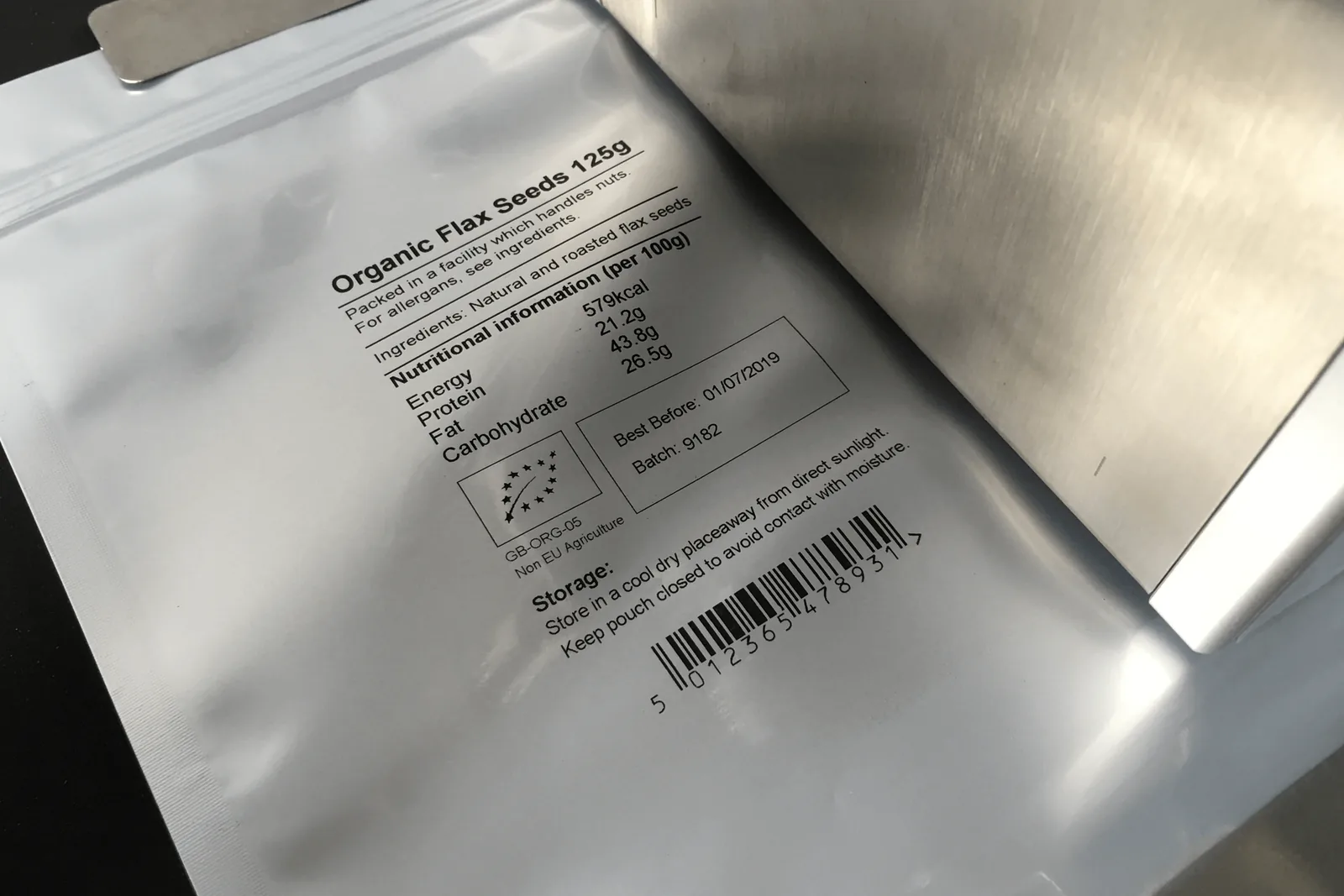
The J511 data states 600 DPI resolution, an adjustable one-to-eight-line layout and a 1.0–12.7 mm print height. Those figures describe the available print engine, not an automatic guarantee that every barcode or small character will scan on every material. Contrast, drop placement, surface finish, line speed and code size must be approved together.
The listed speed is 70 m/min. Practical output depends on the host conveyor or machine, the length and density of the message, product spacing and whether the pack passes the printhead at a stable speed. A sensor triggers the message at the correct product position; where conveyor speed varies, the integration may need an encoder or other speed-following arrangement, subject to the final configuration.
Ink choice is part of the application. The supplied options include quick-dry eco ink, water-based ink and oil-based ink. Porous cartons and paper can accept ink differently from coated labels, plastics, glass or metal. The exact ink must be tested on the production surface, including any mould-release agent, oil, condensation or dust that is present in normal running.
The source data lists USB flash-disk database support and external real-time data printing. Before connecting a database, PLC, ERP or MES, define the field names, data format, update timing, job-selection responsibility and behaviour after a lost connection. A printer capable of accepting external data still needs a controlled workflow that prevents the wrong message being printed.
Printhead position should be rigid and adjustable, with the pack constrained so the distance and angle remain consistent. Curved bottles, unstable pouches or products that wander on a conveyor can create position and focus problems even when the printer itself is operating correctly. Product guides, side belts or a more suitable coding location may be needed.
Maintenance planning should cover cartridge storage, nozzle or printhead care, safe cleaning materials, replacement intervals and how operators confirm the print after a cartridge change. The 42 ml cartridge is listed as typically printing around 800,000 characters, but actual yield changes with character height, density, resolution and message content, so consumption should be measured using the approved job.