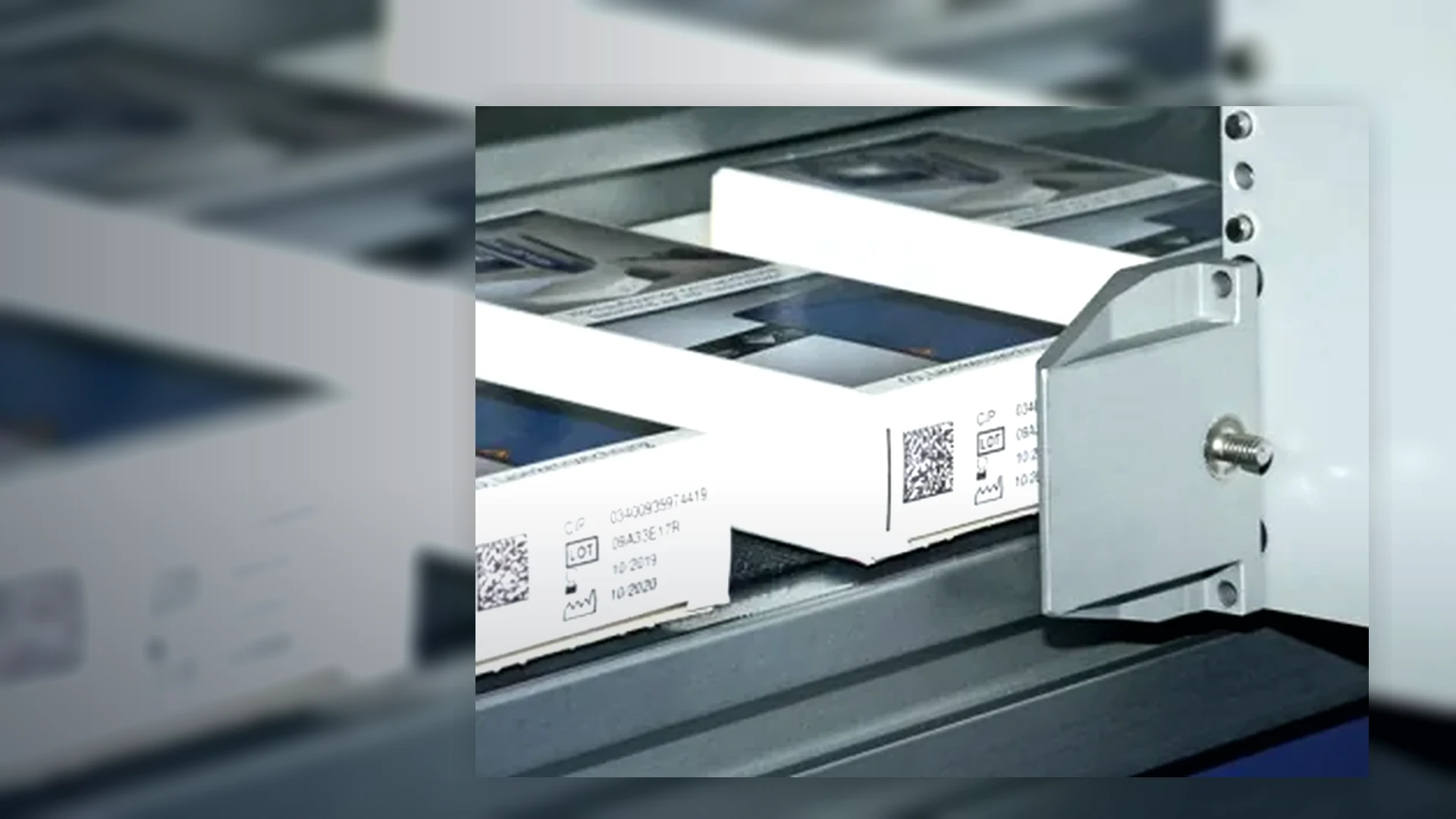
Direct coding versus labels on packaging
The best route depends on the pack surface, amount of information, data variability, presentation requirement and line process. Direct coding and labels solve different problems and can also be used together.
Start with the information and the surface
A short date code on a stable carton is a different duty from a large logistics label on a moving case. Define the message size, data frequency, pack surface and downstream handling before choosing the method.
| Route | Strongest fit | Points to prove |
|---|---|---|
| Direct coding | Dates, batches, lot codes, serials and compact machine-readable data printed onto the pack, label or film. | Substrate compatibility, contrast, adhesion, print distance, motion, available area and downstream rub or moisture exposure. |
| Pre-printed label plus overprint | Branding and fixed information are pre-printed; variable date or batch fields are added before or after label application. | Label coating, position tolerance, web or product movement, overprint area, ink or ribbon compatibility and label stock control. |
| Print-and-apply label | Larger variable labels for products, cases or pallets, including barcodes, addresses, logistics and customer-specific information. | Label size, adhesive, application face, tamp or wipe method, product presentation, print verification and label-presence confirmation. |
Decision factors beyond print appearance
Change frequency
Direct variable printing can reduce pre-printed stock for frequently changing dates or batches. Labels may remain preferable where the full artwork or customer information changes.
Pack presentation
A coder needs a predictable print distance and movement. A label applicator needs a stable application surface and controlled contact. Curves, seams, condensation and soft packs affect both routes.
Verification
Direct codes may need OCR, barcode decode or vision checks. Labels may add print inspection, label presence and application-position checks. Define what “good” means before selecting sensors.
Compare the complete operating process
Consumables and labour should be assessed over the production mix rather than one demonstration run.
- Number of SKUs, batches and customer-specific jobs.
- Ink, ribbon, type, blank labels and pre-printed label inventory.
- Time for job selection, label reel change, cartridge or ribbon change and first-off approval.
- Waste created during line start-up, calibration, label backing disposal, damaged labels or rejected packs.
- Cleaning, planned maintenance, critical spares and support capability.
- Rework route when the mark or label is incorrect.
Use the right specialist route
This site covers direct date, batch and variable-data coding. For dedicated label application and print-and-apply machinery, use Lancing's specialist labelling machinery and print-and-apply resources.
Where the label already exists and only needs a date or batch overprint, the label coding page explains the coding considerations.
Typical selection scenarios
Simple repeated date
Hot foil or another compact coder may be credible on a suitable intermittent label or film process when the message is short and changes are controlled.
High-resolution variable code
Thermal inkjet can be considered for cartons, labels and consistently presented packs; TTO is a strong route for flexible film.
Curved or irregular product
Broader continuous inkjet systems may be more suitable where a non-contact print must tolerate changing product geometry or presentation.
Large case or pallet label
Print-and-apply is often assessed when the information area, barcode size, customer label format or application face exceeds a direct coder's practical remit.
Trial both routes against the same acceptance criteria
Use identical production samples and the complete message. Mark the approved area and include background artwork, coating and any surface treatment. Run the pack through its expected guides, sealing, accumulation and handling.
For direct print, record ink or ribbon, print distance, speed, drying or cooling time and cleaning requirement. For labels, record stock, adhesive, print method, application pressure and the effect of temperature or surface contamination.
Check human readability, data accuracy, code or label position, adhesion and machine-readable symbols after realistic handling. Compare start-up waste and changeover as well as the best sample from each method.
Finally, test the response to a wrong job, missing mark, missing label, unreadable symbol or application fault. The stronger route is the one that meets the complete production requirement with a manageable operating process.
Direct coding versus labels FAQs
Is direct coding cheaper than using labels?
It can reduce label use for short dates, batches or simple marks, but the answer depends on ink or ribbon, print coverage, integration, cleaning, downtime, rejects and whether a label is still required for branding or logistics.
When is a label more suitable than direct printing?
A label can provide a controlled printable surface, larger information area, pre-printed colour and a practical route for products or cases that are difficult to mark directly. Application and adhesion still need testing.
What is print-and-apply labelling used for?
Print-and-apply creates variable labels and applies them to a product, case or pallet. It is often considered when larger barcodes, address, logistics or customer-specific data are required.
Can a coding machine print onto an existing label?
Yes, where the label surface, ink or ribbon and available print window are compatible. The label may be coded before application or after it is applied, depending on the machine and line layout.
Should direct coding and labels be trialled on the same pack?
Yes. Comparing both routes on the real pack and full message helps expose differences in readability, handling, changeover, consumables and line integration.
Compare direct coding and label routes on your pack
Send the product, packaging material, full message, label artwork, output and line layout for an application review.