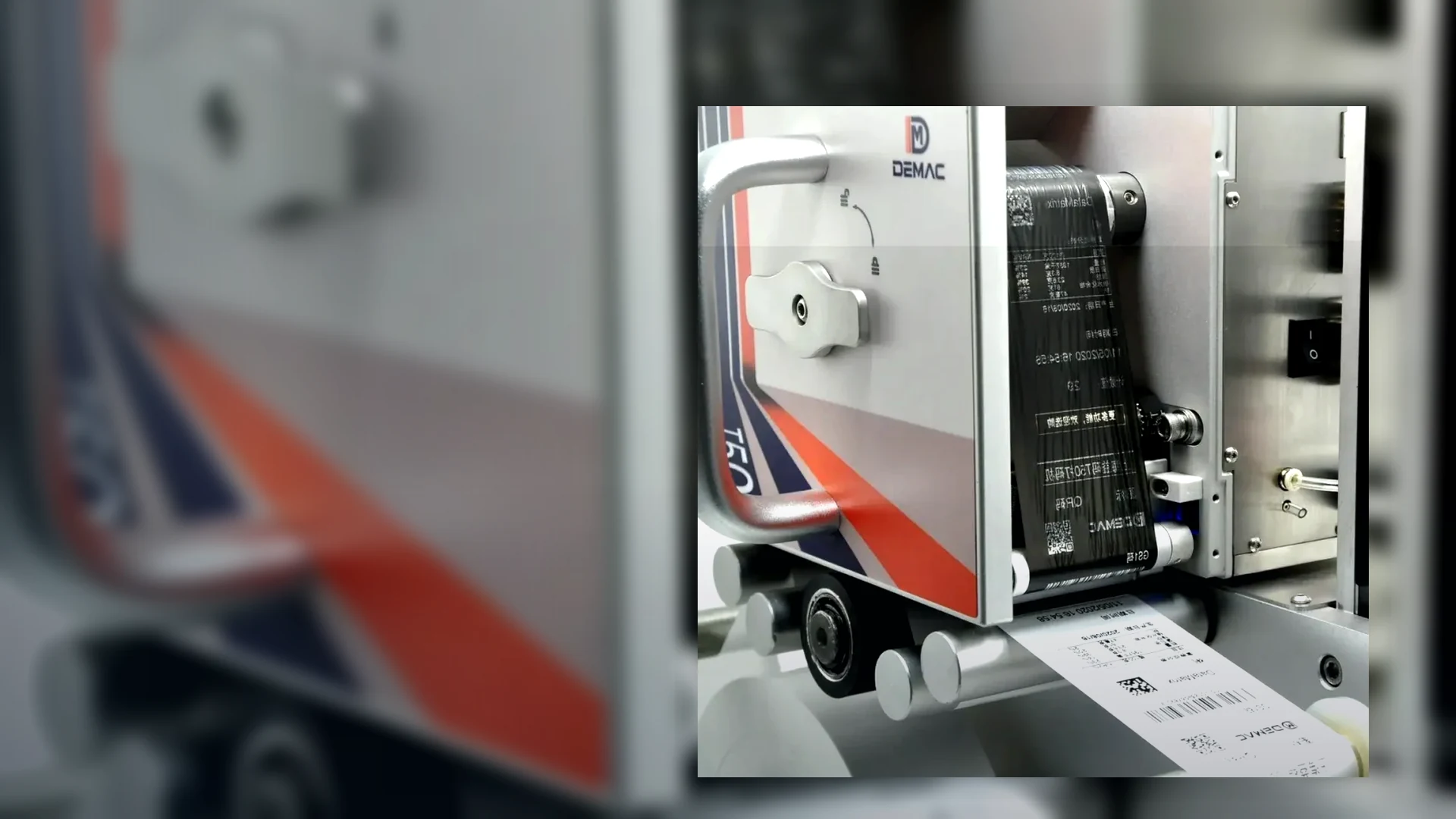
Coding machinery questions and answers
Start with the production question that changes the coding-machine decision, then follow the linked product, application, integration or approval guidance.
Choose and size the coding station
These answers deal with line duty, physical location and multi-format operation before a machine is selected.
How fast does a coding machine need to print?
A coding machine must complete the approved message within the real product or web print window, including normal speed variation, gaps and restarts. Nominal packs per minute alone is not enough to size the duty.
How should a coding machine be mounted on an existing packaging line?
A coding machine should be mounted on a rigid, adjustable structure that holds the approved print relationship while preserving safe access, product control and the existing machine guarding. The bracket is part of the application, not a generic accessory.
Which coding data should come from ERP, MES, PLC or the printer?
ERP or MES should normally own authorised product and production data, the PLC should control the physical line sequence, and the printer should execute an approved message. The exact boundary depends on the existing systems and printer interface, so ownership must be documented field by field.
Integrate, control and approve
These answers connect the physical coding station to data ownership, line recovery and controlled project handover.
Where should a date or batch code be printed on packaging?
A date or batch code should be printed on the most stable accessible surface that remains visible and readable after forming, sealing, labelling, handling and storage. The best location depends on pack geometry, material, line movement and how the code will be inspected.
How should coding changeovers be controlled on multi-SKU lines?
A coding changeover should be treated as a controlled product release: close the previous job, select the authorised new data, set the physical printer and pack path, confirm the consumable, print a first-off sample and release only after both content and quality are approved.
What evidence should be retained after a coding project is approved?
Retain enough evidence to reproduce the approved code and investigate later change: the real sample and substrate, consumable, message version, print and line settings, data interfaces, inspection method, FAT or SAT results, operator procedure and controlled deviations.
Use the existing technical library for deeper evidence
The question pages point to the established product, application and guide pages rather than duplicating their detailed technology content.
Coding-machine selection guide
Eliminate unsuitable technologies, compare the remaining routes and define the trial.
Print quality and substrate testing
Approve adhesion, rub resistance, position and machine-readable codes on real packs.
Line integration and data control
Define triggers, encoders, PLC signals, external data, inspection and reject handling.
Bring the unanswered production question to Lancing
Send the pack, message, line movement and acceptance requirement. The enquiry can then be routed to the product, trial or integration work that resolves it.
Evidence-led reference answers
Use these reference pages where the answer depends on published machine data, project-owned media, pack presentation or substrate behaviour.
Which specifications are published?
Review hot foil, J511, T30 and T50 values and the application checks that remain necessary.
What should a coding sample record?
Connect the image to the pack, consumable, message, movement, conditioning and acceptance result.
Should the pack be coded inline or offline?
Compare live data and formed packs with feeding and preparing flat packaging components.
How do porous and non-porous packs differ?
Understand why ink, ribbon and process settings must be approved on the exact material.
Questions about coding-machine services
These service pages answer the project questions that arise after technology selection: how to prove the print, how to integrate the machine and how to keep the approved process supportable.
How should a coding trial be planned?
Build a representative sample matrix, print the complete message and define conditioning, adhesion, rub, scan and finished-pack checks in advance.
What makes a coding installation repeatable?
Stable product presentation, controlled triggering, suitable speed reference, clear data ownership, fault handling and accessible mounting.
What information speeds up coding-machine support?
Machine identity, settings, consumable, samples, alarms, recent changes and evidence of the surrounding packaging-line state.